
ETHICS · FOR CONSUMERS
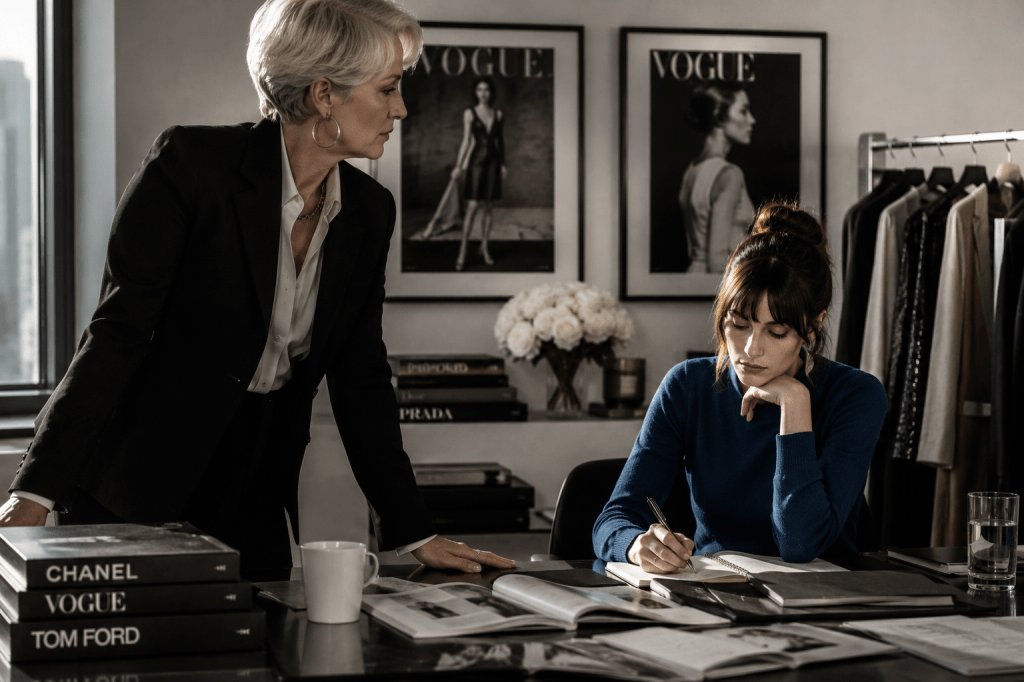
In The Devil Wears Prada, there is a scene that became iconic. Miranda explains to Andy that the cerulean blue of her sweater is not accidental, that it passed through ateliers, runways and editorial rooms before reaching the mass market. She says it as a demonstration of power.
But she reveals something else entirely. Trends do not just happen. They are manufactured, and they are manufactured with one specific purpose: to make what you already own feel outdated.
The Obsolescence Machine
Fast fashion today releases as many as 52 micro-seasons a year, one every single week. Not because taste changes that quickly. Because the frequency of change is the business model.
The results are measurable. We buy around 60 per cent more clothes than we did fifteen years ago, and keep them half as long. The average garment is worn somewhere between seven and ten times before being discarded. Every second, the equivalent of a truckload of textiles goes to landfill or incinerator.
Every new trend devalues the wardrobe you already have. You do not buy because you need to. You buy because the system has convinced you that what you own is no longer enough.
What We Lose Beyond the Money
A wardrobe full of clothes you do not fully recognise yourself in is not an aesthetic problem. It is a symptom.
Fashion was once a language. A way to say who you are without opening your mouth. A garment chosen with intention, worn for years, adapted to your life, is an expression of identity. A garment bought because it is trending this week is an expression of an algorithm.
Identity fragments alongside the wardrobe. You spend more, you own more, and you feel less and less like yourself.
Andy Sachs Knew. She Just Forgot for Twenty Years.
In the sequel, Andy does not follow Runway’s trends. Costume designer Molly Rogers dressed her in menswear and vintage: a three-piece Jean Paul Gaultier pinstripe suit, a vintage Coach satchel, Armani jackets found in second-hand shops. She looks more herself than anyone around her. Not because she is wealthier or better informed. Because she has made a choice.
In the original film she adopted someone else’s aesthetic in order to survive the system. In the sequel she has found her own. The difference between the two versions of Andy is the difference between following trends and building an identity.
The Only Question You Need
Before your next purchase, just this. Do I like this because I like it, or because I have been told to like it?
The difference feels small in the moment of asking. The effect on your wardrobe, your wallet and your sense of self, over the years, is enormous.
Data: Ellen MacArthur Foundation; Earth.Org Fast Fashion Waste Report 2024; The Devil Wears Prada 2, 20th Century Studios, 2026.

Leave a Reply