The film asked the right question. Now it is the industry’s turn to give an honest answer.
On 1 May 2026, the world sat down in front of the big screen and returned to the Runway editorial office, twenty years later. The sequel went on to take more than $670 million worldwide. Miranda Priestly is back, and with her, the conversation about fashion has returned.
I watched the film through the eyes of someone who grew up inside this industry, not as a spectator but as a participant from early childhood. My father introduced me to the business very early. He brought me into the factory and taught me how production is created and managed. He took me to the world’s trade fairs, where I encountered the finest Italian fabrics and accessories. He introduced me to people from every link of the chain: designers, manufacturers, traders, financiers. As a child I sat in on strategic meetings with the financial manager, the production director and the commercial director. I grew up surrounded by real factories, real designers, real family businesses, and that is precisely why I cannot look at this industry with nostalgia, nor with indifference. Only with clear-eyed honesty.
The Devil Wears Prada 2 is a good film. Entertaining, intelligent, brilliantly acted. But beyond the captivating battle for power it portrays, it opens a door onto the serious and long-festering problems of fashion. The film gestures toward the right questions without providing the answers. The answers are our work to do.
The Perspective
Who Is Speaking, and Why It Matters
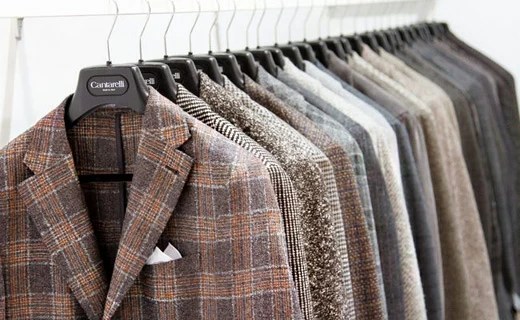
Cantarelli is not a startup. It is not a new idea. It is not a brand born on Instagram. It is a historic Italian company with over 50 years of expertise, built around one of the most complex and noble skills in fashion: the creation of the perfect suit.
For decades the company produced collections for some of the most significant names in global fashion: Gucci, Dior, Balmain, Chanel, Alexander McQueen, Céline, Dolce & Gabbana, Prada, Yves Saint Laurent, Givenchy, Victoria Beckham and many others. We know what this industry looks like from the inside. Not from magazine photographs, but from production floors, from collaboration with designers, from the selection of materials and fabrics, through to sales and the building of an international network of partner brands and retailers.
Cantarelli also carries a significant production investment in Bulgaria: a modernised factory with the latest generation of machinery, combining European precision with the efficiency of contemporary technology. Our two production pillars, Italy and Bulgaria, are not a compromise. They are a strategy.
But the history of our company is also the history of the industry and the pressures it has faced. When brands began relocating production eastward en masse, in pursuit of labour costing a fraction of European rates, at the expense of quality, control and ethics, European family factories closed one after another. Despite the pressure and the sudden withdrawal of orders from global brands, overnight and without warning, we did not surrender. We continued to follow the mission we have been actively committed to since 2018: to preserve and revive authentic fashion with its traditional values. Know-how, natural materials, craftsmanship, the true worth of a garment, and ethics toward every participant in the supply chain.
I write this not to praise myself. I write it because when I speak about the problems of this industry, I speak not merely as a commentator but as a participant in fashion’s most brutal battles, and they are, truly, brutal.
The Diagnosis
The Real Problems the Film Did Not Show
Miranda Priestly worries about the decline of print fashion publishing. We need to talk about something far more fundamental: the decline of fashion itself as a system of values.
Roughly 92 million tonnes of textile waste are generated every year, most of it burned or buried. Fashion remains one of the most exploitative industries in the world by labour conditions. And the overwhelming majority of young designers leave the industry within a few years of graduating.
- Overproduction without value. Garments designed to last two months, manufactured in runs of hundreds of thousands, sold off at 80 per cent discount and then incinerated.
- The collapse of young designers. The system is built without any real path to realisation for emerging talent. They have no access to the market, no contact with mentors, and they study under the promise of working directly for global brands, only to find that the role available to them is attaching labels in a warehouse. The talent disappears.
- The disappearance of local fashion business. Family shops are closing. Local identity is eroding, the way Florence once differed from Lyon, and Lyon from Brussels, dismantled by a globalised monoculture of retail.
- The destruction of European production. Factories with over 50 years of tradition are closing, not because they cannot produce, but because they cannot compete on price with facilities that operate without standards, where labour is valued in cents.
- Synthetic materials as the norm. We have convinced consumers that it is acceptable to be wrapped in petroleum, despite its effects on people and the planet. Polyester is being imposed en masse over natural, breathable alternatives: wool, silk, linen, cashmere.
- Labour exploitation. The beautiful storefront conceals a supply chain in which dignity and humane working conditions are treated as a luxury.
- The loss of meaning. Fashion was once an art form with genuine worth. Today it has been replaced by purely financial ambition: produce as much as possible, at the lowest possible cost, and sell as much as possible.
When a garment is designed to be discarded after three wearings, the problem is not the consumer. The problem is the system that has normalised the mass consumption of worthless clothing.
Somewhere along the way, fashion stopped asking itself why. Why does this garment exist? For whom was it made? Who produced it, and under what conditions? When the only questions became how fast and at what cost, meaning began to disappear, quietly, season after season.
The garment became a consumable. The wardrobe became a warehouse of unworn things. And fashion, which was once a language, a way of saying who you are without opening your mouth, became noise. Abundant, cheap, and forgotten by the following week.
The Film
Why “Prada 2” Matters Despite Its Limitations
The film’s financial success is a signal, not merely a number. It means the world wants to talk about fashion. Not about the next collection. About the industry itself.
The Devil Wears Prada 2 examines the decline of fashion media, the competition between generations, the question of whether old institutions can survive in the digital age. All of this is real and important, but it leaves us at the surface. The film says nothing of exploited workers or forced labour. It does not speak of the shuttered factories across Europe. It does not speak of the young designers lost before they ever emerge. It tells an absorbing story, but it does not reveal to consumers the full picture of an industry in crisis.
And yet I am grateful for it, because it opened the door. Because millions of people left cinemas and asked themselves: what is actually happening to fashion? Where do clothes come from? What disappeared from that world once saturated with beauty and meaning, and when?
The film offers no answers. But it poses the right question. And sometimes the right question is where everything begins.
The Solution
The Model the Industry Abandoned, and Must Reclaim
If the diagnosis is clear, the solution is no mystery. It existed before fast fashion dismantled it. We must restore it, not as nostalgia, but as strategy.
First: production returns to certified, quality factories with tradition. Family-run facilities with decades of accumulated know-how and three generations of expertise. Places where quality control, working conditions and environmental impact are all carefully observed. Places where every garment carries the story of master tailors who have given their lives to the craft.
Second: materials matter. Wool, silk, linen, cashmere. Natural fibres are not a luxury. They are the minimum standard of respect, for the body that wears the garment and for the earth it comes from. Synthetic alternatives are not a more convenient solution. They damage nature and harm the health of those who wear and produce them.
Third: made-to-measure and made-to-order as the norm, not the exception. The model in which tonnes of garments are produced eighteen months before a season, filling vast warehouses only to be incinerated, discarded or cleared at season’s end, is long obsolete and must be replaced. Beyond its social and environmental damage, it is economically irrational. The industry is neither agile nor responsive enough to answer actual market demand. It produces to blind forecasts made a year and a half in advance, then works tirelessly to convince consumers that what it has already made are the new trends. A garment made for a specific person cannot be thrown away after three months. It was made for them. It carries their exact measurements, their choice of fabric, their sense of self.
Fourth: young designers enter the real market. Every young designer deserves the opportunity to work as one. Not only in competitions detached from reality, but in genuine ateliers, where they become the personal stylist and fashion consultant of each of their clients.
Fifth: we restore the true value of the garment. Every piece we create is made to be worn many times, over many years. We do not serve artificially invented trends lasting two weeks, whose sole purpose is to make us consume more. We invest in garments of worth: quality, considered, elegant. Because elegance will always be in fashion. It requires no season to justify its existence.
“Buy less, choose well, make it last.” Vivienne Westwood
Philosophy
Fashion as Art, and Why This Is Not a Cliché
When we say fashion is art, it is usually dismissed as a marketing phrase. But look at history: at the ateliers of the master tailors, at the architecture of their cuts, at their designs and photographs, at the natural Italian fabrics woven finer than a human hair. The only accurate description is art.
Art requires craft. Art requires the presence of the human mind and hand in the act of creation. And that is precisely what is incompatible with mass production.
Can artificial intelligence design a garment? Technically, yes. Can it understand why the woman for whom it is intended wants precisely this fabric, precisely this cut, precisely this length? No. Because those decisions are not algorithmic. They are human, contextual, bound to identity and to history.
The new generation in fashion carries a specific responsibility. We are the inheritors of a tradition that was systematically dismantled over three decades. We can let it die quietly. Or we can do what is harder and more important: preserve it, renew it, and pass it forward. From the conviction that value is not an outdated concept. It was simply, temporarily, displaced by volume.
The Mission
To Return Ethics and Meaning to Fashion
- To help manufacturers implement the MTM and MTO model, because a garment made for a specific person cannot be without worth.
- To introduce consumers to the truths of this industry, and to give them the information and tools to make more conscious decisions. The informed consumer is the most powerful force for change.
- To help young designers realise their potential, build their own ethical fashion brand, and find their place in an industry that has for too long closed its doors to them.
- To unite European factories, not as competitors but as partners in a shared cause. Together we can offer the market what mass production never can: garments of genuine worth, made with care, at a fair price.
Once, people kept their clothes. They passed them down. They remembered them. A coat could tell a story: where it came from, who had worn it, what it had lived through. That bond between a person and a garment did not vanish because people changed. It vanished because the system decided it was unprofitable. We believe it can return. Not as nostalgia, but as a conscious choice. The choice to own less, but own something true. To wear a garment knowing where it came from, who created it, and why. To dress not for the season, but for life. This is the fashion that deserves to exist, and this is the fashion we will bring back, together.
Manifesto
The future of fashion will not be determined by those who produce the most, but by those who create with the greatest worth. The era of worthlessness is ending, because people now understand the difference. We are here to show them the way.
The global voice of ethical business


Leave a Reply